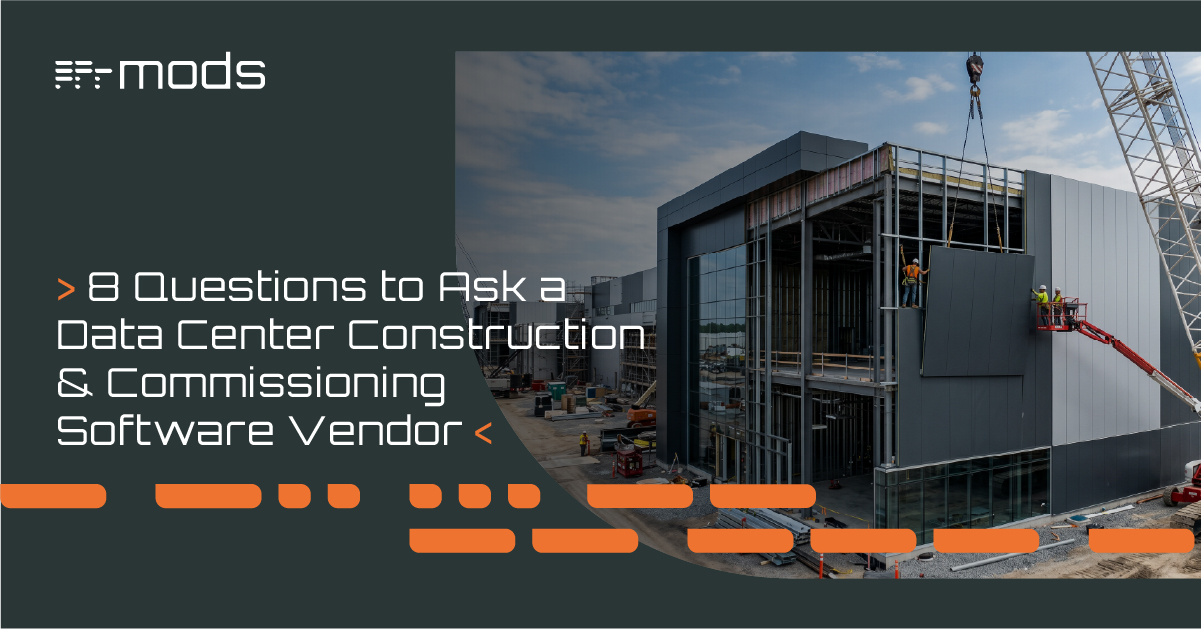
Data centers are increasingly resembling energy megaprojects in scale, complexity, and risk — which means the same digital project delivery methods used in oil and gas, like Advanced Work Packaging and Master Data Management, are becoming essential for building data centers efficiently and safely.
It may sound oxymoronic to suggest data center projects would benefit from digitalization, seeing that these facilities support humanity’s most sophisticated revolution to date. But, as with all the assets that make our world go round, we must consider not just the operational phase – what it does – but the entire lifecycle, especially how it’s built and maintained during its operational life.
Surely, hyperscale data centers and colocation facilities ought to be employing the most impactful digital technologies during construction and maintenance. But, the thing is, construction methodology and tools don’t necessarily reflect the sophistication of the facility itself. In response to this gap, data center developers are, it seems, already taking a nod from energy-sector project expertise as evidenced by recent news that a former energy executive has recently come to the helm of a major US data center group.
The data center market opportunity
Over 3,200 new data centers are expected to be constructed globally between 2026 and 2035. This reflects rapid market growth going from USD 261 billion in 2025 to over USD 660 billion by 2033 – an impressive12.7 percent compound annual growth rate. Data centers aren’t just going to become more prevalent. They’re getting bigger, too. The average data center site has increased an incredible 144 percent since 2022, now spanning 224 acres on average.
As we look towards an imminent reality with significantly more, increasingly larger data centers, it raises questions about the development, construction, and maintenance of these critical assets. This sudden global expansion is happening at a rate faster than policy and construction practices evolve. And there is an irony in that data centers, while bolstering our very present, futuristic digital economy, do not necessarily employ modern techniques, tools, and principles in their construction. In fact, the modern data center echelon shares uncomfortably common ground with today’s larger-scale oil and gas projects. But therein also lies the solution.
From power dependency and safety-critical environments to complex commissioning and lifecycle asset management, data centers increasingly resemble utility-grade infrastructure. As a result, the same proven methodologies and digital solutions used in energy mega-projects will prove essential to delivering data center programs successfully, efficiently, and with as low a footprint as possible.
The Common Ground Between Data Center and Energy Projects
Data center development and energy projects may seem worlds apart. And, superficially, they are. What we see is one that stores and processes digital information; the other generates energy. The prior: a modern marvel. The latter? Well, particularly for oil and gas: a lingering vestige of an old-school dependency. But, look deeper and they share striking similarities.
For starters, both data centers and energy facilities operate in mission-critical environments with near-zero tolerance for failure. Forget about inconvenience, downtime can be catastrophic. Such assets require redundant power systems, continuous monitoring and control systems, and highly disciplined operational procedures.
Data centers are, obviously, energy-centric. They rely on large-scale power import or generation, utility-grade electrical distribution networks, as well as strict energization and isolation protocols. Just like energy projects. Both types of assets – data centers and energy infrastructure – operate in industrial-grade environments. Despite their high-tech image, data centers are indeed industrial environments featuring high-voltage systems, complex HVAC and cooling infrastructure, and hazardous zones and strict safety protocols. These conditions demand the same rigor in design, construction, and operations and maintenance as oil and gas, nuclear, or power generation facilities.
Still not convinced of the similarities between data centers and energy projects?
Permitting, Compliance, and Grid Integration
Both sectors navigate a myriad of regulatory approvals, environmental and sustainability requirements, and grid connectivity and resilience planning. The relative maturity may vary but the mindset is the same and these shared project factors introduce complexity early in the project lifecycle and require precise, upstream coordination for constraint-free execution.
Schedule and Cost Pressures
Now that we’ve established that the infrastructure and regulatory context of data center development significantly overlaps that of oil and gas assets – in principle if not in maturity – it goes that workflows and business pressures also share common ground. Both types of projects are vulnerable to scope creep and discovery scope additions as well as to supply-chain volatility that impacts materials and constraint readiness, which is notably pernicious in the midst of today’s geopolitics.
Given the scale of investment and drive for high returns on investment, data center projects – again, like those for oil and gas – are subject to demanding delivery timelines and, hence, vulnerable to budget overruns. When project constraints aren’t visible, or when teams aren’t able to easily communicate, when information is out of date or not easily accessible, productivity suffers. Robust, reliable digital project controls deescalate these risks.
Translating lessons learned from oil and gas
The wealth of knowledge coming from oil and gas project experience means that data center development can leapfrog into the most productive best practices with efficiency-enhancing digitalized workflows. The playbook that works for energy projects, developed on the back of decades of field-based learning, applies to data centers, too. This convergence means that proven approaches such as Advanced Work Packaging (AWP) and digitalized workflows with real-time updates and structured document management are essential for safe, predictable, and efficient project execution.
Key Risks in Data Center Projects, and How Digitalization Solves Them
Despite their nod to the future, many data center programs still suffer from fragmented workflows, unclear data structures, and inconsistent execution. Below are some common risks and how tools vetted by oil and gas and other energy project solve them.
Frontend Data Definition & Lineage
- The Risk: Poorly structured frontend data leads to unclear lineage, making it difficult to trace information across the project lifecycle.
- The Impact: Rework and duplication, data inconsistency, and challenges during commissioning and handover.
- The Solution: Frontend digital alignment. Establish a structured, digital-first approach from the outset that includes clear data definitions and standards, traceable data lineage, and a single source of truth from day one. This ensures that every downstream activity—from engineering to operations—is built on reliable, consistent data.
Unclear Scope & Requirements
- The Risk: Ambiguous requirements and poorly defined scope lead to confusion across stakeholders.
- The Impact: Cost overruns, misaligned expectations, and delays in execution.
- The Solution: Requirements and specification clarity via structured constraint management, clear specification alignment, and enhanced project controls. This ensures all stakeholders are aligned early, reducing uncertainty and preventing costly changes later.
Fragmented Data Across Stakeholders
- The Risk: Siloed systems and disconnected teams result in fragmented information.
- The Impact: Miscommunication, inefficiencies, and sub-optimal decision-making.
- The Solution: Data and project controls to create a quality-assured data environment including integrated data systems, centralized access to information, and real-time visibility across stakeholders. This eliminates silos and ensures everyone is working from the same playbook.
Late Design Conflicts
- The Risk: Design clashes are discovered too late in the project lifecycle.
- The Impact: Expensive rework, schedule delays, decreased time-on tools, and increased risk during construction.
- The Solution: Integrated data environment that enables connected, real-time data across disciplines, constraint management and early identification of conflicts, as well as continuous validation throughout design and construction. This shifts problem detection from reactive to proactive. The use of Advanced Work Packaging (AWP) methodology, which leans on Master Data Management and, hence, requires sophisticated digital systems and expertise, promises proactive versus reactive execution.
Inaccurate Deliverables
- The Risk: Outdated, inconsistent, or not readily accessible data leads to unreliable deliverables.
- The Impact: Errors in construction, delays in commissioning, and poor operational readiness.
- The Solution: Robust Quality Assurance with automated validation processes, standardized data checks, and verified, accurate deliverables. This ensures confidence in every output.
Fast-Track Pressure
- The Risk: Aggressive schedules lead to rushed work and unsafe conditions.
- The Impact: Reduced productivity, increased errors, and safety risks.
- The Solution: Advanced Work Packaging (AWP) to achieve superior workfront planning and time-on tools to identify and remove constraints early, align engineering, procurement, and construction, and maximize productive field time. The result is faster delivery without compromising safety or quality.
Safety and Visibility Challenges
- The Risk: Limited real-time visibility restricts informed decision-making.
- The Impact: Increased safety incidents, delayed issue resolution, and reduced operational control.
- The Solution: Real-Time 3D project models and comprehensive dashboards for at-a-glance understanding. Live 3D project visualization, real-time dashboards, and continuous model updates empower teams with the visibility needed for fact-based decision making.
Weak Digital Foundations
- The Risk: Poor data structures and unreliable systems undermine project delivery.
- The Impact: Failed integrations, inefficient handovers, and operational challenges owing to an inability to easily access information.
- The Solution: Commissioning readiness and data-driven handover that ensures structured, validated data throughout the project/asset lifecycle, seamless transition from construction to operations, reliable, operations-ready information. This creates a strong foundation for long-term performance.
Reframing Data Centers as Industrial Assets
Data centers are not IT infrastructure, nor are their lifecycles fully hi-tech. They are critical industrial assets on which our businesses and societies are deepening reliance on. Comparable in complexity and importance to energy projects, data center development stands to benefit from proven cross-sector construction methodologies and digital tools to reduce waste, increase productivity, and deliver reliable facilities with fewer operational hiccups.
Recognizing this paradigm shift will ensure data center construction practices can keep up with demand, as well as be scalable and quality assured and with laudable returns on investment. By adopting proven methodologies and digital solutions from the energy sector, data center developers can reduce risk, improve safety, enhance productivity, and ensure reliable, long-term performance.
Harnessing lessons learned from oil and gas projects will transform how data centers are built, commissioned, and maintained much in the way it’s done with energy-sector projects. Data centers are lucky to have these solutions available much earlier in the sector’s history, which carries a host of fringe benefits such as negating the need to transition between old and new ways of working; data centers have the luxury of starting fresh with the new.
This article was first published by illuminem.


 Lisa De Vellis, PE
 Lisa De Vellis, PE: Jul 28, 2026, 2:51:53 PM
 MODS Marketing

 Jovana Jankovic